When to Buy a Home Weather Station
Buy a home weather station in late winter or early spring, before storm season starts, when clearance sales land and you still have calm days to mount the sensors. If you want it for gardening or frost tracking, buy at least a month before the first frost date so you can learn the readings in time.
On this page (9 sections)
- Why buy before storm season instead of during it?
- When do weather station prices tend to drop?
- Which weather window makes installation easiest?
- What's the best time to buy for gardening and frost tracking?
- Should you wait for a new model or buy the current one?
- Which station fits each kind of buyer?
- How does the buying season affect setup and power?
- When should you hold off on buying?
- Which timing should you pick?
Buy a home weather station in late winter or early spring, ahead of storm season and before the first frost date for your area. That timing puts clearance sales on last year's models within reach and leaves calm, mild days for mounting the sensor.
If you garden, the best moment is a month or so before you need frost and rain data. For storm tracking, getting the unit up before the season starts means you're not shopping while the weather you want to watch is already here.
Knowing when to buy a home weather station comes down to two things: the sales calendar and the weather window for installation. The sections below cover both, plus which station fits each kind of buyer.
Why buy before storm season instead of during it?
Buying ahead of storm season gives you readings during the storms you care about most. A station bought in calm weather has time to settle and prove its data before the first big system arrives.
Stations exist to show you hyper-local conditions, so the payoff comes when the weather turns. The Ambient Weather WS-2902 measures wind speed and direction, rainfall, UV intensity and solar radiation from its Osprey sensor array.
That's the data you want when a front is moving in, not after it has passed.
Demand also rises as storms approach. Stock on popular models can thin out, and the calm weeks are when you can mount a pole without fighting wind or rain.
A unit sitting in its box during the first storm delivers nothing.
There's a learning curve too. You need time to pair the console, check that the wireless signal reaches it and get familiar with the dashboard before you rely on the numbers.
When do weather station prices tend to drop?
Late winter clearance and major shopping events are the usual discount windows. Prices aren't fixed, so the practical move is to track a model you want for a few weeks and buy when it dips.
New models tend to arrive in spring, which pushes older stock down in February and March. That's also when you can install without freezing.
The two windows overlap nicely for anyone planning ahead.
Big shopping events bring broader discounts. The catch is that demand spikes then, so a bargain can vanish quickly and shipping slows.
If you buy in that window, order early enough to have the unit before your install day.
Set a target and watch it rather than chasing the lowest price forever. A station that arrives a month before storm season is worth more than one that saves a few dollars but shows up after the first system.
Which weather window makes installation easiest?
Pick a calm, dry day with mild temperatures and no rain in the forecast. Wind makes pole mounting awkward, and rain turns a ladder and roof work into a hazard.
Solar-powered sensors need sunlight to charge, so a bright day helps you confirm the panel is working. The Ambient Weather array uses a solar panel with optional battery backup, and its wireless signal reaches the console up to 330 feet in open air.
Avoid days when the ground is frozen solid if you need to drive a stake or set a post. Late fall and early spring usually give you soft ground and comfortable working weather.
Check the forecast for the whole afternoon, not just the morning. You want enough daylight to mount the sensor, run any wiring and test the readings before dark.
What's the best time to buy for gardening and frost tracking?
Buy at least a month before your area's first frost date. That gives you time to learn the temperature and humidity readings before you need them to protect plants.
Frost dates vary by region, so use your local extension service's average first-frost date as the target. Ordering early means you can watch the dew point and overnight lows as they start to drop.
Rainfall data matters for irrigation planning too. The Ecowitt Wittboy Pro HP2564 collects temperature, humidity, wind, light, UV and rainfall from its WS90 sensor.
Its haptic rain sensor measures rainfall volume and detects when rain starts and stops.
A station bought in spring also covers the whole growing season. You'll have months of local data before the fall frost risk returns, which makes the first season far more useful.
If you mostly want frost alerts, set them up as soon as the station is running. Testing an alert in mild weather is easier than discovering it doesn't fire on the night it matters.
Should you wait for a new model or buy the current one?
Buy the current model unless a new one is weeks away. Waiting months for a small spec bump usually costs you a season of data.
Weather stations are mature products. A newer model may add a feature or two, but the core readings, temperature, humidity, wind and rain, don't change much from year to year.
If you see a new release announced for the coming weeks, waiting can be sensible. Otherwise, the calm weather in front of you is the real deadline.
A station in use beats a better one still on the shelf.
Refurbished and open-box units can also land in the discount windows. Check the return policy and that all the parts are included, since a missing sensor bracket can stall your install.
Which station fits each kind of buyer?
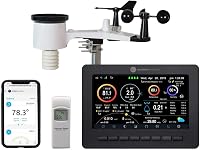
The Ambient Weather WS-2902 suits most people who want a full station with a display. It pairs a complete Osprey sensor array with an easy-to-read LCD color display and Wi-Fi remote monitoring.
The Tempest Weather Station suits anyone who wants a simple, solar-powered unit with an app instead of a console. It has no moving parts and monitors temperature, humidity, pressure, wind, dew point, solar radiation, UV, lightning and rainfall from one device.
The Ecowitt Wittboy Pro HP2564 suits tinkerers who want a large 7-inch TFT console and room to add more sensors. Its HP2560 console pairs with the WS90 outdoor sensor and supports extra sensors such as soil moisture probes.
All three send data to online weather networks, so you can share your backyard conditions. That makes them useful for gardeners, storm watchers and anyone curious about how their local microclimate differs from the regional forecast.
How does the buying season affect setup and power?
A warm, sunny buying window makes setup easier, and it lets you confirm the solar panel works. Power is the part new owners most often overlook, so plan for it when you choose your date.
The Ambient Weather array is solar powered with optional battery backup. The Tempest runs on solar power with an included lithium-ion battery.
The Wittboy Pro's outdoor sensor is solar or battery powered, and its indoor console runs on a cord.
Buying in spring means the panel gets strong sun from day one. A unit bought in deep winter may run on backup batteries until the days lengthen.
Either way, mount the sensor where it gets direct sun for most of the day.
Wireless range matters too. The Tempest transmits up to 1,000+ feet, the Ambient reaches 330 feet in open air and the Wittboy Pro covers up to 300m in open space.
Check your planned spot against those figures before you commit.
When should you hold off on buying?
Wait if you're mid-move, mid-renovation or unsure where the sensor will go. A station needs a fixed mounting spot with open sky and good wireless range to your display.
Also wait if you only want a basic forecast. Your phone already gives you that.
A home station earns its place when you want hyper-local readings for a garden, a storm-prone area or a smart-home setup.
If you're renting or moving soon, a compact all-in-one unit travels more easily than a pole-mounted array. Consider size and mounting before you buy.
Once you've settled on timing, read our guide to how a weather station works to understand what each sensor measures. Then compare models in our roundup of the best weather stations for your home.
Which timing should you pick?
Pick late winter or early spring if you want sales and calm install weather in one window. That's the simplest answer to when to buy a home weather station, and it works for most buyers.
If you garden, buy a month before your first frost date. If you track storms, get the unit running before the season starts.
If you're adding it to a smart home, buy when you have time to set up alerts and automations.
For app-driven setups, see our guide to the best smart weather stations. For mounting help, our walkthrough on how to set up a home weather station covers the steps from pole to first reading.
Don't wait for a perfect price. Buy when the weather is calm and the station will be in use before the conditions you want to watch arrive.
Frequently asked questions
Is a home weather station worth buying for a small yard?
Yes, if you want local rain, wind and temperature rather than a regional forecast. A compact all-in-one like the Tempest or Wittboy Pro fits small yards, while a station with a separate array suits a spot with more mounting room.
Do weather stations go on sale at certain times of year?
Discounts tend to cluster around late winter clearance and big shopping events. Watch for price drops on last year's models in February and March, and compare before you buy so a sale doesn't push you toward the wrong setup.
Can I install a weather station in winter?
Mounting a station in freezing weather is harder because tools, poles and fingers get cold, and snow can hide the spot you picked. A calm day in late fall or early spring makes the install safer, and you can still use the station through the winter once it's up.
Should I buy a weather station before or after a storm season?
Buy before, so you can watch the season's storms with real local data. Buying after means you spend the first storms without readings and may miss the peak demand period when stock and prices move.
How long does a weather station take to set up?
Plan an afternoon for most home stations, including mounting the sensor, pairing the console or app and checking the readings. Solar-powered units need a sunny spot, so pick a clear day and confirm the data reaches your display before you finish.