Sainlogic 12-in-1 Weather Station Review: Worth It? (October 2026)
The Sainlogic 12-in-1 Wireless Station is a strong choice for local home weather tracking without Wi-Fi. This Sainlogic weather station review compares it with three alternatives, including a Wi-Fi model for remote access.
On this page (11 sections)
- Which Sainlogic weather station should you choose?
- What does the 12-in-1 system measure?
- How useful is the rain gauge?
- Is the display easy to read?
- Does it connect to a phone or Wi-Fi?
- Which local-display alternative fits your home?
- How should you set up the outdoor sensor?
- What power and care does it need?
- What common mistakes should you avoid?
- How do these Sainlogic models compare?
- Is the Sainlogic 12-in-1 weather station worth choosing?
The Sainlogic 12-in-1 Wireless Station suits buyers who want a large display of local weather readings without Wi-Fi. This Sainlogic weather station review compares it with connected and larger-screen alternatives for homes, gardens and farms.
The main choice is how you want to view readings. Pick the 12-in-1 for a console in the home, or choose the Wi-Fi model if you want remote monitoring and data export.
Which Sainlogic weather station should you choose?
Choose a Sainlogic model by deciding first whether you need phone access, then comparing screen preference and the readings you plan to use. The four options here all track multiple weather conditions, but their display and connection features differ.
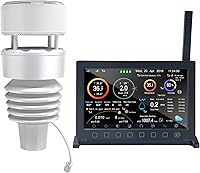
Sainlogic 12-in-1 Wireless Station: Best for offline home tracking

- 6.5-inch display
- Wind, rainfall and pressure readings
- Solar power with battery backup
A broad set of weather readings on a large indoor screen, with no Wi-Fi connection required. Consider it when local monitoring matters more than phone access.
Pros
- Tracks wind speed and direction, rainfall, temperature, humidity and pressure
- Solar power with battery backup
- Manual rainfall calibration
Cons
- No Wi-Fi or app access
- Backup batteries are not included
The 12-in-1 is the straightforward fit for local monitoring. It displays wind, rainfall, temperature, humidity, pressure, dew point and perceived temperature, and its outdoor sensor uses solar power with battery backup.
Who should choose this Sainlogic weather station?
Choose it if you want to check readings on a console at home and don't need an app. It suits gardeners, homeowners and weather fans who value rainfall totals and wind readings in one place.
Skip it if you regularly need to check conditions while away or want to export historical readings. The best Sainlogic weather stations guide compares the brand's options for different needs, including connected monitoring.
What does the 12-in-1 system measure?
The 12-in-1 tracks common outdoor conditions plus indoor readings. Its console can show temperature, humidity, wind, rainfall, pressure, dew point and perceived temperature.
| Measurement or feature | What it offers |
|---|---|
| Temperature | Indoor and outdoor readings; stated range is -40°F to 140°F |
| Humidity | 10% to 99% |
| Wind | Speed and direction |
| Rainfall | Cumulative statistics and manual calibration |
| Barometric pressure | 300 to 1100 hPa |
| Other readings | Dew point and perceived temperature |
| Display | 6.5-inch LCD with adjustable backlight |
A station reports conditions at the sensor's location, so placement affects whether readings match the area you care about. Put the outdoor sensor in a clear location that suits the measurements you want to follow, then use the manual to interpret its settings.
Our backyard weather station guide explains which features and placement questions matter before choosing a system. For a basic explanation of how sensors turn weather conditions into readings, see how a home weather station works.
How useful is the rain gauge?
The rain gauge is specified at ±1 mm precision in light rain and ±7% in heavy rain. Manual calibration lets you adjust it for local conditions, while cumulative statistics help you follow totals over time.
Rain readings can be affected by nearby roofs, branches or walls that block or redirect rainfall. Keep the collector open to the sky and use the manual when adjusting its calibration.
For more detail on how a common station gauge collects rain, read our guide to tipping bucket rain gauges. If rain totals will guide watering, check the station after storms and compare its readings with the conditions around your garden.
Is the display easy to read?
The 6.5-inch LCD uses large, bold fonts and three adjustable backlight levels. This gives you options for bright rooms and dimmer indoor spaces such as a bedroom.
Think about where the console will sit before you choose a station. Viewing distance, glare and nearby light sources can matter as much as the screen size.
If screen readability is your priority, compare options in our guide to weather stations with large displays. The Sainlogic Professional 7.5-Inch is another option in this review for buyers who prefer a bigger screen.
Does it connect to a phone or Wi-Fi?
No, the 12-in-1 is designed for wireless sensor-to-console readings, without Wi-Fi. You can check the measurements on its indoor display, but this model does not include remote monitoring features.
Sainlogic 5G Wi-Fi Station: Best for remote property checks

- 2.4 GHz and 5 GHz Wi-Fi
- 443 ft stated open-area transmission range
- Two years of local data storage
Adds remote monitoring, cloud storage and data export for buyers who want to check conditions away from home. It also tracks the main indoor and outdoor weather readings.
Pros
- Remote monitoring and historical data features
- Supports Weather Underground and Alexa
- Local storage and Excel export
Cons
- Wi-Fi setup is required for remote features
- Open-area range may differ from a property with obstructions
Choose the Sainlogic 5G Wi-Fi Station if you want to check readings away from home, view historical trends or export stored data to Excel. It supports 2.4 GHz and 5 GHz Wi-Fi, with up to two years of local data storage.
Before choosing it, make sure its connected features match how you use weather data. Remote monitoring depends on completing Wi-Fi setup, and its stated sensor range of 443 ft applies to open areas, so buildings and other obstructions may affect placement.
Which local-display alternative fits your home?
The two other local-display options suit buyers who want to avoid Wi-Fi but prefer a color screen or larger display. Both use an outdoor wireless sensor and show readings on a console.
Sainlogic 6.5-Inch 12-in-1: Best for color screen fans

- 6.5-inch HD color display
- No Wi-Fi or app required
- 443 ft stated wireless range
A local display option with a color screen and a range of weather readings. Its stated setup uses a wireless outdoor sensor without an app or hub.
Pros
- Large color display with adjustable backlight
- Tracks wind, rainfall, pressure and temperature
- No Wi-Fi or monthly fees
Cons
- No app-based remote monitoring
- Rain accuracy is stated as ±7%
The Sainlogic 6.5-Inch 12-in-1 is a good fit if a color display matters more to you than phone access. It tracks conditions such as wind, rainfall, pressure and temperature, with no app or hub required.
Sainlogic Professional 7.5-Inch: Best for large print viewing

- 7.5-inch display
- Adjustable 3-level brightness
- Wind, rainfall and pressure readings
A larger-screen alternative for buyers who want easy-to-read local readings. It also tracks multiple rainfall totals and core outdoor conditions.
Pros
- Largest stated screen among these options
- Adjustable 3-level brightness
- Tracks hourly through yearly rainfall totals
Cons
- No Wi-Fi or app access
- Confirm mounting location and viewing distance before choosing a display size
Choose the Professional 7.5-Inch if a bigger screen is the deciding feature. It tracks rainfall totals across hourly, daily, weekly, monthly and yearly periods, which can help you follow patterns around a garden or property.
How should you set up the outdoor sensor?
Set up the sensor where it has a clear path for the readings you care about and can communicate with the indoor console. Sainlogic describes pole, rooftop, fence, farm and orchard placements for the 12-in-1.
Start by choosing a mounting point with open exposure for wind and rain, away from roof edges and objects that can affect collection. Confirm the console can receive its signal from that spot before securing the mount.
The roof mount or tripod guide can help you weigh mounting options. For the Wi-Fi model, complete network setup as well if remote viewing and data storage are part of your plan.
What power and care does it need?
The 12-in-1 outdoor sensor uses solar power with battery backup, and the required three AA batteries are not included. The box includes a display console, outdoor sensor, manual and power adapter.
Follow the manual for battery placement and power connections. Keep the rain collector clear of leaves and debris, check the sensor mount periodically, and replace or inspect backup batteries as needed.
Our guide to weather station batteries covers battery choices and practical care. Avoid changing several settings at once; adjust one item, then observe whether the readings and display behave as expected.
What common mistakes should you avoid?
The most common setup mistakes are placing the sensor where wind or rain is blocked, assuming wireless means Wi-Fi, and expecting remote access from a console-only station. These can lead to confusing readings or the wrong model choice.
Don't assume the 12-in-1's wireless sensor sends information to a phone. It communicates with its indoor display, while the separate Wi-Fi model adds remote access and connected services.
Also avoid comparing rain totals from sensors installed in different locations without accounting for exposure. If a reading seems unusual, check the collector and mount first, then consult the manual before changing calibration.
How do these Sainlogic models compare?
The 12-in-1 is the best fit for a broad set of local readings on a large console without Wi-Fi. The alternatives shift the focus to phone access, a color screen or a larger display.
Choose the Wi-Fi Station if remote checks, historical data and Excel export are important. Choose the 6.5-Inch 12-in-1 for its color screen, or the Professional 7.5-Inch if larger text is your main priority.
The best weather stations guide can help if you're comparing Sainlogic with other brands. For a wider look at outdoor sensor setups, see our best outdoor weather stations.
Is the Sainlogic 12-in-1 weather station worth choosing?
Choose the Sainlogic 12-in-1 Wireless Station if local readings for wind, rain and indoor or outdoor conditions on a large console meet your needs. Pick the Wi-Fi model if you want to check conditions away from home and export data, or choose a local-display alternative for a color screen or larger text.
If you're still weighing screen size against other features, use our weather stations with large displays guide alongside the Sainlogic weather station comparison.
Frequently asked questions
Does the Sainlogic 12-in-1 weather station use Wi-Fi?
The Sainlogic 12-in-1 Wireless Station does not use Wi-Fi. Its outdoor sensor sends readings wirelessly to the indoor display, so it suits local monitoring; choose the Sainlogic 5G Wi-Fi Station if you want remote phone access and connected services.
What does the Sainlogic 12-in-1 measure?
It monitors indoor and outdoor temperature and humidity, wind speed and direction, rainfall, barometric pressure, dew point and perceived temperature. The display also supports clock and weather functions, so check the manual to understand each screen and setting.
How accurate is the Sainlogic 12-in-1 rain gauge?
Sainlogic gives rainfall accuracy as ±1 mm in light rain and ±7% in heavy rain, and says you can calibrate it manually for local adjustments. Place the outdoor sensor where rain can reach the gauge without nearby roof edges or other obstacles affecting collection.
Is the Sainlogic 12-in-1 weather station solar powered?
The outdoor station uses solar power with battery backup, while the included components list also names a power adapter for the display. Three AA batteries are required, but aren't included, so check the manual for the correct battery placement and operating instructions.