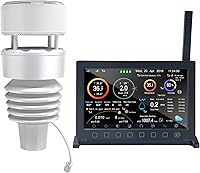
Is the Tempest Weather Station Good?
Yes, the Tempest Weather Station is good for most homes. It packs wind, rain, temperature, UV, and lightning sensing into one solar-powered unit with no moving parts, so it fits people who want hyper-local data without upkeep.
On this page (9 sections)
- What makes the Tempest Weather Station good?
- How does it handle wind and rain without moving parts?
- Is the Tempest accurate enough for a backyard?
- How fast and how far does it send data?
- Who is the Tempest Weather Station best for?
- How do you mount and place it for good results?
- What power and upkeep does it need?
- Where does the Tempest Weather Station fall short?
- Is the Tempest Weather Station good for you?
Yes, the Tempest Weather Station is good for most homes. It packs wind, rain, temperature, UV, and lightning sensing into one solar-powered unit with no moving parts, so it fits people who want hyper-local data without upkeep.
The honest answer comes with a condition: it earns its keep when you can mount it in clean open air.
If your yard is boxed in by trees or walls, a cheaper station with a separate anemometer may serve you better. This guide walks through what makes the Tempest good, where it falls short, and how to get the most from it.
For a side-by-side view with a rival brand, our Tempest vs Ambient Weather comparison covers the trade-offs.
What makes the Tempest Weather Station good?
The Tempest is good because one solar-powered sensor replaces a whole cluster of separate instruments. It monitors temperature, humidity, barometric pressure, wind speed and direction, dew point, solar radiation, UV index, lightning strikes and rainfall from a single device.
Most traditional stations split those across an anemometer, rain gauge and thermo-hygro sensor on a mast. Fewer parts mean fewer cables to run and fewer spots for a spider or a leaf to jam a reading.
WeatherFlow says the unit is built with no moving parts and engineered for years of near-zero maintenance. That matters if you want weather data without climbing a ladder every season.
The single-piece design also keeps every reading coming from the same spot, so wind, rain and temperature all describe one exact patch of your yard.
How does it handle wind and rain without moving parts?
It handles wind and rain with non-mechanical sensors rather than spinning cups and a tipping bucket. The Tempest measures wind speed and direction and rainfall without the moving pieces that wear out or freeze on older stations.
That design is the core of its reliability story. A traditional anemometer can seize in ice or stall after a dry, dusty summer.
The Tempest's solid-state approach sidesteps that failure mode. The trade-off is that solid-state rain sensing can struggle to separate light drizzle from mist, so treat very small rain totals as approximate.
For most gardeners and smart-home users, the trade is worth it. You get a station that keeps reporting through winter storms and summer heat without a service visit.
The non-mechanical sensor technology is also why the whole thing fits in a single plastic body that weighs about 1.6 pounds and measures roughly 4.19 by 8.25 by 8.5 inches.
Is the Tempest accurate enough for a backyard?
The Tempest is accurate enough for home weather, garden decisions and smart-home triggers, though it won't match a calibrated research instrument. It reads temperature, humidity, pressure, dew point, solar radiation, UV and lightning in one pass, and the maker describes machine-learning forecasts that sharpen with local data.
The rain and wind figures are the ones to treat with normal backyard caution, because any station's readings depend on where it sits. A sensor 6 feet up beside a fence reads different wind than one on a clear roof.
That is why placement does more for accuracy than any spec sheet. If you want to compare how another brand handles the same job, read our guide to the best Ambient Weather stations for a sense of the alternatives.
The Tempest's edge is that its readings update every 3 seconds, so you see a gust or a shower as it happens rather than minutes later.
How fast and how far does it send data?
It sends data every 3 seconds over a wireless link rated up to 1,000+ feet, which covers nearly any home lot. WeatherFlow states the solar-powered outdoor sensor transmits wirelessly up to 1,000+ feet.
In practice, walls, metal siding and dense foliage cut into that range. The station connects over 433 MHz or 868 MHz radio frequencies rather than Wi-Fi, so it doesn't compete for your home network.
The indoor receiver bridges to your phone and the cloud. That means your phone shows live conditions from the backyard wherever you are.
The 3-second cadence is faster than many stations, which refresh every 30 to 60 seconds. You'll notice it most during storms, when a quick update tells you whether the wind is building or easing.
Check the distance from your mounting spot to the indoor receiver before you commit.
Who is the Tempest Weather Station best for?
The Tempest suits smart-home users, gardeners and weather watchers who want one tidy device. Pick it if you want backyard data feeding Alexa, Rachio or IFTTT so irrigation and lights react to real conditions.
It also fits anyone tired of replacing batteries and clearing jammed rain gauges. {{product B0868WY7NY | One solar-powered sensor covers wind, rain, UV and lightning, with updates every 3 seconds.}} It is less suited to someone who wants a wall-mounted display with big numbers in the kitchen. The Tempest has no display, so readings live in the app and on Alexa.
If you love a physical console, a traditional station fits you better. For a budget-minded alternative, our Sainlogic weather station guide covers lower-cost options with consoles.
The Tempest's real buyer is the person who wants data, not a gadget on the counter.
How do you mount and place it for good results?
You get good results from the Tempest by mounting it in open air, clear of obstructions, at a sensible height. Wind and rain readings suffer most from bad placement.
A spot beside a wall or under a tree will underread wind and shelter the rain sensor. Aim for an open area away from buildings and tall plants.
The Tempest comes with a flat base and pole mount, so basic installation is straightforward. For rooftops, walls or adjustable height, the {{product B0CL7VM3RF | A weatherproof aluminum mount that adjusts for rooftop or wall placement.}} The Tempest Original Universal Mount is an optional kit.
WeatherFlow says it is not required for every install, and that the bracket straps shown in some images are not included. The mount is aluminum and rust-resistant, so it holds up outdoors year-round.
Pick it when the included base can't reach the height or angle you need.
What power and upkeep does it need?
It needs very little upkeep because it runs on solar power with a rechargeable battery inside. A Lithium Ion battery is included.
Daylight charges it, and the internal cell carries the station through dark stretches. In a long, gray winter the charge can dip, so keep the solar panel facing the sky and free of snow, dust and bird droppings.
Wipe it now and then and the station mostly looks after itself. The no-moving-parts design means no bearings to oil and no cups to replace.
If your panel does run low, our guide on how to charge a Tempest Weather Station walks through the steps. You won't need disposable batteries for the sensor.
Keep a pack of {{product B01C4PP8FK | Long-life AA lithium cells for the devices around your setup.}} for other gear, since the Energizer Ultimate Lithium AA batteries hold power for years and handle temperatures from -40F to 140°F. They suit backup use in smart-home and outdoor devices.
Where does the Tempest Weather Station fall short?
It falls short in a few specific situations, and knowing them saves you a return. The biggest is the missing display.
If you want a console you glance at without opening an app, this station won't give you one. The second is placement sensitivity.
A yard crowded with trees or tall buildings will distort wind and rain readings, and no sensor design fixes that. Third, the solid-state rain gauge can be less precise in light drizzle than a tipping bucket.
Finally, the app-first design assumes reliable Wi-Fi at the indoor receiver. None of these is a dealbreaker for the typical buyer.
They are reasons to look elsewhere if a physical display or a sheltered yard matters to you. Weigh them against the easy install and the near-zero maintenance before you decide.
The station rewards an open, sunny mounting spot more than any other single factor.
Is the Tempest Weather Station good for you?
The Tempest Weather Station is good, and it is a clear buy for most people who want one low-maintenance sensor feeding an app and a smart home. The solar power, no-moving-parts build and 3-second updates make it a strong fit for gardeners, smart-home tinkerers and anyone who checks backyard weather daily.
Skip it if you insist on a wall display or your yard can't offer open air. In that case, compare the alternatives in our Tempest vs Ambient Weather breakdown before you buy.
Plan the mount and the mounting spot first, then let the station do the rest. Asked plainly, is the Tempest weather station good?
For the right yard and the right buyer, the answer is a confident yes.
Frequently asked questions
Does the Tempest Weather Station need batteries to run?
No. The outdoor sensor is solar powered and comes with a Lithium Ion battery included.
It charges from daylight and sends readings wirelessly, so you don't swap batteries like you would on many traditional stations.
How far can the Tempest sensor sit from my router?
The solar-powered outdoor sensor transmits wirelessly up to 1,000+ feet. That covers most yards, but walls, metal siding and dense trees cut the range, so keep the path to the indoor receiver as clear as you can.
Can the Tempest Weather Station work with a smart home?
Yes. WeatherFlow says it integrates with Amazon Alexa, Rachio, IFTTT and popular smart home platforms.
You can use real-time backyard weather to trigger lights, thermostats or irrigation, which is the main reason people pick it over a basic display station.
Do I need the universal mount to install a Tempest?
No. Tempest comes with a flat base and pole mount, so the separate Tempest Original Universal Mount is optional.
Buy it when you want adjustable height or a rooftop, wall or open-space position that the included base can't reach.