Ambient Weather WS-5000 vs WS-2000: Which Is Better? (October 2026)
For ambient weather ws-5000 vs ws-2000, choose the WS-5000 for ultrasonic wind sensing and included indoor readings, or the WS-2000 for UV and solar measurements. Match the station to the readings and setup you need.
On this page (8 sections)
- Ambient Weather WS-5000 vs WS-2000: what changes?
- What do the consoles and sensor packages include?
- How should you plan installation and power?
- Who should buy the WS-5000?
- Who should buy the WS-2000?
- What setup mistakes should you avoid?
- Is the WS-4000 a useful alternative?
- Which Ambient Weather model should you choose?
For ambient weather ws-5000 vs ws-2000, choose the WS-5000 for ultrasonic wind sensing and indoor readings, or the WS-2000 for UV and solar measurements. Both give you a color console and a wireless outdoor array, but their sensor packages serve different priorities.
The WS-5000 suits buyers who value an ultrasonic wind sensor with no moving parts and want indoor temperature, humidity and pressure readings included. The WS-2000 makes more sense if UV and solar radiation matter and you want those measurements alongside wind, rain, temperature and humidity.

Ambient Weather WS-5000 vs WS-2000: what changes?
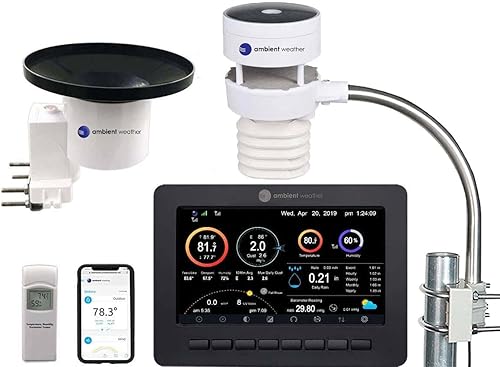
The main choice is between the WS-5000's ultrasonic wind sensor and included indoor sensor, and the WS-2000's UV and solar readings. Both stations show conditions on a color console and send data wirelessly from an outdoor array.
The WS-5000 array updates every five seconds. Its indoor sensor measures temperature, humidity and barometric pressure.
The WS-2000 measures wind speed and direction, rainfall, temperature, humidity, UV and solar radiation. It also supports imperial and metric units, calibration for major parameters, and high and low alarms.
A weather station is most useful when its measurements answer the questions you actually have. For a garden, you may care about rain and sunlight exposure; for a wind-focused setup, the sensor design and mounting position may matter more.
Which station wins in ambient weather ws-5000 vs ws-2000 for wind?
The WS-5000 is the stronger fit if you specifically want ultrasonic wind sensing with no moving parts. The WS-2000 still measures wind speed and direction, while also covering UV and solar radiation.
Both arrays communicate with their consoles by 915 MHz radio frequency. The WS-5000's stated range is up to 1,000 feet line of sight in open air and about 300 feet under most conditions; the WS-2000's is up to 330 feet in open air and about 100 feet under most conditions.
Treat those as placement guides, not a promise for every yard. Walls and other obstacles can reduce reception, and the wireless signal will not pass through solid metal, earth or ground.
The WS-5000 is the clearer choice for someone who values its ultrasonic approach and wants frequent updates. If you mainly need everyday wind readings with UV and solar data in the same package, the WS-2000 covers more outdoor measurement types.
What do the consoles and sensor packages include?
The WS-5000 includes an indoor sensor, while the WS-2000 requires an optional one for indoor temperature, humidity and pressure readings. Both include a color console and an outdoor array, so either can give you a dedicated indoor display.
The WS-5000 package includes a TFT full-color LCD, ultrasonic array, rain cup and indoor/outdoor thermo-hygrometer-barometer. Its array also has a solar panel and a pagoda-style radiation shield.
The WS-2000 comes with a high-definition, full-color TFT console and an integrated outdoor array. Its display can show calculated details such as feels-like temperature, dew point, 10-minute wind readings, sunrise, sunset and moon phase.
Those calculated details are useful context, but they are different from the core measurements. If indoor conditions matter, include the cost and effort of the optional WS-2000 sensor in your decision, and verify the exact sensor you need before buying.
For a wider look at the brand's models, see our Ambient Weather station guide. If console readability is a key factor, compare options in our guide to weather stations with large displays.
How should you plan installation and power?
Both outdoor arrays need a clear mounting position on a suitable pole, and neither package includes the pole. Plan the array and console locations before you secure anything, since obstacles can affect the wireless connection.
Both models mount to a pole between 1.25 and 2 inches in diameter using an adaptive bracket and U-bolt design. The WS-5000 package includes the mounting hardware; the pole itself is separate.
The WS-5000 outdoor array uses solar power. The WS-2000 uses a solar panel to charge a super capacitor and can use optional AAA battery backup; its array requires 3 AAA batteries for that backup, which are not included.
A stable mount helps keep the array in its intended position. Use the bubble level included with the WS-5000 array when aligning it, and check that the array has room around it and is not blocked by a nearby wall or roof edge.
Before mounting, place the console where you expect to use it and check whether it receives the outdoor signal. A signal that works during a temporary placement can still change when the array or console is moved behind metal, a wall or another obstacle.
Our weather station roof mount guide can help you choose between a roof and a pole location. For the difference between ultrasonic and cup-style wind sensors, read our ultrasonic vs mechanical anemometer guide.
Who should buy the WS-5000?
Buy the WS-5000 if you want ultrasonic wind sensing and indoor temperature, humidity and pressure in the same system. It is especially suitable for weather enthusiasts who will use those indoor readings and want a color console for local monitoring.
Its lack of moving parts in the wind sensor may appeal if you want to avoid a rotating cup mechanism. The array's five-second updates also suit someone who wants frequent changes in conditions reflected on the display.
Skip the WS-5000 if UV and solar radiation are must-have measurements in the same outdoor array. The WS-2000 explicitly includes those readings, while the WS-5000's main advantage in this comparison is its wind sensor and included indoor sensor.
Also account for the separate pole and the need to find a suitable mounting spot. A premium sensor design offers little value if you cannot place the array where it can communicate with the console and observe local conditions.
For more detail on that model, see our Ambient Weather WS-5000 review. If your main goal is measuring wind and rain outdoors, our outdoor weather station guide covers other setups to consider.
Who should buy the WS-2000?
Buy the WS-2000 if you want UV and solar radiation readings along with wind, rain, temperature and humidity. It fits a backyard or garden setup where sun exposure is part of the picture, and its console includes alarms and calibration options.
The indoor sensor is optional, so this model suits you best if outdoor readings are your priority or you are comfortable adding indoor monitoring separately. Its console also shows calculated information such as dew point and feels-like temperature.
Skip the WS-2000 if you want indoor temperature, humidity and pressure included from the start. The WS-5000 and WS-4000 include an indoor sensor, while the WS-2000's is sold separately.
Think about the array's backup battery requirement before installation. Its solar panel handles primary power, but the sensor array requires 3 AAA batteries for backup, and those batteries are not included.
What setup mistakes should you avoid?
The most common avoidable problem is choosing a mounting point before checking the radio path and pole fit. Measure the pole first, then confirm that the console can receive the array from the planned location.
Don't assume an open-air range figure will apply through several walls or a metal structure. Test the likely console location with the array nearby before making the mount permanent, then move the parts to their final positions and check reception again.
Don't confuse measured readings with calculated ones on the WS-2000 console. Values such as feels-like temperature and dew point add useful context, but wind, rain, temperature, humidity, UV and solar radiation are the array's listed measurements.
Finally, don't buy the WS-2000 expecting indoor readings without the optional indoor sensor. If monitoring inside is part of the plan, account for that sensor when comparing the complete setups.
Is the WS-4000 a useful alternative?
Consider the WS-4000 if you want ultrasonic wind and haptic rain gauges with no moving parts. It includes an indoor sensor and a color console, making it a relevant third option for buyers focused on those features.
The WS-5000 combines ultrasonic wind sensing with a rain cup, while the WS-4000 uses haptic rain sensing. The WS-2000 instead emphasizes a broad set of outdoor readings that includes UV and solar radiation.
Choose among them by starting with the measurement you care about most. The WS-4000 is worth a closer look for its wind and rain sensor approach, but compare its details with the WS-5000 if ultrasonic wind is your main priority.
Which Ambient Weather model should you choose?
Choose the WS-5000 for ultrasonic wind sensing and included indoor readings; choose the WS-2000 for UV and solar measurements. Pick the WS-4000 if its ultrasonic wind and haptic rain combination better fits your setup.
For the ambient weather ws-5000 vs ws-2000 decision, start with whether you need UV and solar readings or prefer the WS-5000's wind sensor and included indoor sensor. Then check your pole, console location and need for backup batteries before choosing.
Frequently asked questions
What is the main difference between the WS-5000 and WS-2000?
The WS-5000 has an ultrasonic wind sensor array with no moving parts and includes an indoor sensor for temperature, humidity and barometric pressure. The WS-2000 array measures wind, rain, temperature, humidity, UV and solar radiation, while its indoor sensor is optional.
Does the WS-2000 measure UV and solar radiation?
Yes. Its outdoor sensor array measures UV and solar radiation, along with wind speed and direction, temperature, humidity and rainfall.
The WS-2000 also supports imperial and metric units and calibration for major parameters.
Does the WS-5000 include an indoor sensor?
Yes. It includes an indoor sensor for temperature, humidity and barometric pressure.
The WS-2000 can provide those indoor readings with an optional sensor sold separately.
Is the WS-5000 ultrasonic?
Yes. Its sensor array uses ultrasonic technology for wind measurement and has no moving parts.
Ambient Weather says the array sends real-time updates every five seconds.
What is another option besides the WS-5000 and WS-2000?
The Ambient Weather WS-4000 combines ultrasonic wind and haptic rain gauges with no moving parts. It includes an indoor sensor for temperature, humidity and barometric pressure, along with a color console.


