Ambient Weather WS-5000 vs WS-4000: Which to Buy? (November 2026)
Choose the Ambient Weather WS-5000 if you want a separate rain cup and a more expandable ultrasonic array; choose the WS-4000 for a compact all-in-one setup with a haptic rain gauge and no tools needed. The WS-5000 wins overall for most buyers who want accuracy and room to grow.
On this page (7 sections)
Choose the Ambient Weather WS-5000 if you want a separate rain cup and the more expandable ultrasonic array; choose the WS-4000 for a compact all-in-one setup with a haptic rain gauge. For most buyers who want accuracy and room to grow, the WS-5000 is the better station.
The ambient weather ws-5000 vs ws-4000 question comes down to how much sensor separation and display quality you need. Both are solar-powered ultrasonic stations from the same brand.
The WS-5000 gives you more pieces and a TFT full-color display. The WS-4000 packs the same core sensing into one compact unit and keeps the same premium color console.
This comparison walks through the specs, the rain gauge design, the install, the smart features and who each station suits. Then it names the one we would pick for most yards.

Ambient Weather WS-5000 vs WS-4000: the quick verdict
The WS-5000 wins overall for most buyers because its separate rain cup and TFT display add real accuracy and readability. The WS-4000 is the better pick when you want a fast, compact install and the same console family.
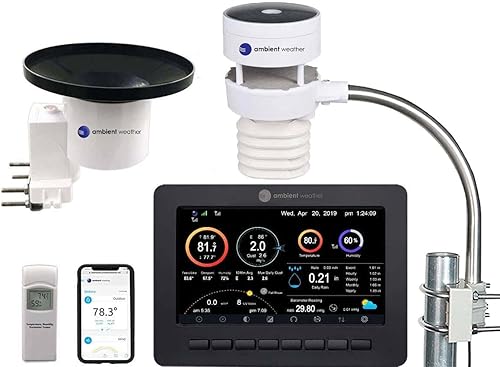
The WS-5000 earns an 8.5 in our scoring. It pairs an ultrasonic sensor array with a separate rain cup, an indoor/outdoor thermo-hygrometer-barometer and a TFT full-color LCD display.
The maker calls it its most sophisticated home and light industrial station, and the separate rain cup is the reason.
The WS-4000 earns a 7.9. It uses ultrasonic wind and haptic rain gauges in one housing, so there are no moving parts on either sensor.
The compact array installs with no tools, and the color console matches the WS-2000 and WS-5000 models.
The gap is not huge. The WS-4000 is a capable station that shares the same console family and the same ultrasonic wind technology.
The WS-5000 simply gives you more separation between sensors and a display that is easier to read at a glance.
Our score weighs specs, features and buyer intent against what you are shopping for. For a station where precipitation accuracy matters, the separate rain cup tips the balance.
For a station where you want a simple mount and fewer pieces, the WS-4000 closes most of that gap.
The WS-5000 ships as a complete kit, with the sensor array, rain cup, indoor unit and display all in one box. The WS-4000 includes its array, display with power adapter, indoor sensor and manual.
Both arrive as working stations without a separate part number to hunt down.
Side by side: how the two stations compare
The WS-5000 splits its sensors into more pieces, while the WS-4000 combines them into one compact array. That difference drives most of the choice.
| Product | Best for | Sensor type | Display | Connectivity | Our score |
|---|---|---|---|---|---|
| Ambient Weather WS-5000 | accuracy and expansion | Ultrasonic wind, separate rain cup | TFT full-color LCD | RF 915 MHz to console | 8.5 |
| Ambient Weather WS-4000 | compact all-in-one installs | Ultrasonic wind, haptic rain | LCD color console | Wi-Fi | 7.9 |
The WS-5000 includes an ultrasonic sensor array, a separate rain cup, an indoor/outdoor thermo-hygrometer-barometer and a TFT full-color LCD display. The array updates weather conditions every five seconds.
The maker says the ultrasonic anemometer is more sensitive to changes in wind speed and direction than traditional wind cup designs.
The WS-4000 includes an outdoor array, a display with a power adapter, an indoor sensor and a manual. Its wind and rain sensing live in the same compact housing.
The color console is the same premium display used on the WS-2000 and WS-5000.
The sensor array on the WS-5000 carries a pagoda thermo-hygrometer radiation shield with passive aspiration for temperature and humidity readings. A bubble level and solar panel are part of that same array.
The WS-4000 covers outdoor temperature, humidity and wind from its compact array.
Both are solar-powered and both transmit to the Ambient Weather Network. The WS-5000 connects to the console over RF at 915 MHz, with a range up to 1000 feet line of sight in open air.
That drops to about 300 feet under most conditions, and the wireless signal will not pass through solid metal, earth or ground.
The WS-4000 lists Wi-Fi connectivity. Both stations feed the Ambient Weather Network so you can monitor remotely and set alerts.
The WS-5000 runs on a solar panel plus 5 AA batteries. The WS-4000 display runs from its power adapter.
Which rain gauge design fits your yard?
The WS-5000 uses a separate rain cup, which gives you a dedicated precipitation sensor; the WS-4000 uses a haptic rain gauge built into the array. Pick the WS-5000 if rain totals matter most.
The WS-5000's extra-large rain cup is separate from the wind sensor. The maker says that larger cup helps with better accuracy.
Because the rain sensor is separate, you can place it where it catches rain cleanly, away from the wind array's mounting point.
The rain cup has a removable lid, which makes service and maintenance easier. That matters over years of leaves, pollen and debris.
The WS-4000's haptic rain gauge detects rain through vibration in the same compact housing as the wind sensor. It has no moving parts, so there is nothing to jam or wear.
The trade-off is that rain sensing and wind sensing share one mounting spot.
For a buyer who tracks rainfall totals closely and wants a dedicated gauge, the WS-5000's separate cup is the clearer choice. For a buyer who wants fewer pieces and no moving rain parts, the WS-4000's haptic gauge does the job in one unit.
If you are also weighing the WS-5000 against a smaller model in the same family, our comparison of the ambient weather ws-5000 vs ws-2000 explains where the sensor split matters.
Service access on the rain cup
The WS-5000's removable lid is a quiet advantage. A rain cup collects whatever the sky sends down, and a lid you can lift off lets you clear debris without hauling the whole assembly down.
The WS-4000 avoids that chore by having no cup to clear. Its haptic gauge has nothing inside that leaves can clog.
The question is whether you would rather clean a cup now and then or give up a dedicated rain sensor entirely.
How hard is setup and mounting?
The WS-4000 installs faster because its all-in-one array needs no tools; the WS-5000 takes more care because you mount the array and the rain cup separately. Pick the WS-4000 if you want the quickest path to a working station.
The WS-4000's compact design is built for an easy install in any location. Its array mounts without tools.
That suits a buyer who wants a station up and reporting in an afternoon.
The WS-5000's sensor array mounts to any pole between 1.25 and 2 inches in diameter. The adaptive mounting bracket and U-Bolt design tighten onto your mounting pole, which is not included.
A bubble level is included for plumb installation.
The WS-5000 also needs its separate rain cup placed and its indoor thermo-hygrometer-barometer set up inside. That is more steps, but each piece has a clear job.
The separate indoor sensor monitors temperature, humidity and barometric pressure.
The sensor array can sit close to the ground because it is wireless. That gives you flexibility on placement, and the maker points to that freedom as one of the ultrasonic array's benefits.
The RF link does the rest as long as the array has a clear line to the console.
If you want to skip the extra mounting decisions and get the same color console, the WS-4000 is the simpler build. Our full Ambient Weather WS-5000 review covers its install and sensor placement in more detail.
Which display is easier to live with?
The WS-5000's TFT full-color LCD is the nicer display of the two, while the WS-4000 uses the same premium color console as the WS-2000 and WS-5000. Pick the WS-5000 if the display sits where you look at it often.
The WS-5000 ships with a TFT full-color LCD display. TFT panels are typically sharper and brighter than basic LCDs, and the full-color layout makes it easier to scan several readings at once.
The display shows indoor and outdoor conditions from the included sensors.
The WS-4000's display is the same high-quality color console used on the WS-2000 and WS-5000 models. In practice that means the WS-4000 buyer is not giving up the premium console look.
The included power adapter keeps it running without relying on batteries.
Both stations send data to the Ambient Weather Network. The WS-5000's dashboard lets you customize tiles, share hyperlocal conditions and set alerts.
The WS-4000 offers remote monitoring, data analysis and alerts through the same network.
If the display is a centerpiece in your kitchen or hallway, the WS-5000's TFT panel is the better fit. If the console is mostly a backup to the app, the WS-4000's console is more than enough.
Which smart features and network support matter?
Both stations connect to the Ambient Weather Network; the WS-5000 adds smart home integration through IFTTT, Google Home and Alexa. Pick the WS-5000 if you want to trigger home routines from weather conditions.
The WS-5000 is smart home ready. You can set alerts, access your data remotely and program your home based on weather conditions using IFTTT, Google Home, Alexa and more.
Enhanced Wi-Fi lets the station transmit wirelessly to the personal weather station network as an optional setting.
The WS-4000 integrates with the Ambient Weather Network for remote monitoring, data analysis and alerts. Its smart home integrations stop at the network.
If you want your station to talk to other smart devices, the WS-5000 is the one to choose.
Both let you join the Ambient Weather Network community. You can customize dashboard tiles, share hyperlocal conditions and build your own forecast for the community.
The WS-5000's network access is part of its smart home package, while the WS-4000 keeps it focused on monitoring and alerts.
The WS-5000 also lists a "create your own forecasts" feature marked as coming soon. That is a forward-looking extra rather than something you can count on at setup, so treat the smart home hooks as the concrete difference between the two.
For a smart home setup where weather drives blinds, fans or irrigation, the WS-5000's integrations are the deciding feature. If you just want to check conditions from your phone, either station works.
Readers comparing brands should also see our Ecowitt vs Ambient Weather breakdown and our Tempest vs Ambient Weather comparison.
Which station should you buy?
Buy the Ambient Weather WS-5000 if rain accuracy, display quality and smart home integration top your list. Buy the WS-4000 if you want a compact all-in-one station that installs fast and still feeds the same network.
Here is the decision rule in plain terms.
Pick the WS-5000 when you want a separate rain cup for dedicated precipitation readings, a full-color TFT display you will actually read, and IFTTT, Google Home or Alexa routines tied to the weather. It is the better station for a yard with room to mount separate sensors and a buyer who wants to expand later.
The 8.5 score reflects that combination.
Pick the WS-4000 when you want the quickest install. Its all-in-one array needs no tools, its haptic rain gauge has no moving parts and its color console matches the bigger models.
It is the better fit for a small yard, a renter-friendly setup or a buyer who wants a capable station without extra mounting steps. The 7.9 score reflects the smaller feature set.
The ambient weather ws-5000 vs ws-4000 choice is really about sensor separation versus simplicity. Most buyers who track rainfall and want smart home hooks will be happier with the WS-5000.
Buyers who value a fast, compact install and the same network support should take the WS-4000 and put the savings toward a mounting pole.
Whichever you choose, both stations share the same no-moving-parts wind technology and the same community network. Start with the Ambient Weather WS-5000 review if you are leaning toward the top model, then check the sensor split in our ambient weather ws-5000 vs ws-2000 guide before you order.
Frequently asked questions
Is the Ambient Weather WS-5000 better than the WS-4000?
The WS-5000 is the stronger station overall for buyers who want a separate rain cup, a full-color TFT display and more room to expand. The WS-4000 is the better value for a compact all-in-one install with the same color console family.
Do both stations use ultrasonic wind sensors?
Yes. Both the WS-5000 and the WS-4000 use ultrasonic wind sensing with no moving parts, so there are no cups or vanes to wear out.
The WS-5000 pairs its ultrasonic array with a separate rain cup, while the WS-4000 uses a haptic rain gauge in the same housing.
Which station is easier to install?
The WS-4000 is easier to install because its compact all-in-one array needs no tools. The WS-5000 needs its sensor array and separate rain cup mounted and leveled, though its bubble level helps with plumb alignment on a pole.
Do both stations connect to the Ambient Weather Network?
Yes. Both the WS-5000 and the WS-4000 connect to the Ambient Weather Network, where you can customize a dashboard, share hyperlocal data and set alerts.
The WS-5000 also lists IFTTT, Google Home and Alexa integration.
Which station should I pick for a small backyard?
Pick the WS-4000 for a small yard because its compact all-in-one array takes less mounting space and needs no tools. Pick the WS-5000 if you can give its separate rain cup and sensor array clear mounting space and want the extra accuracy.