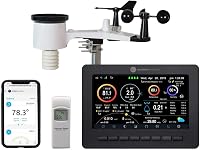
Where Are Ambient Weather Stations Made?
Ambient Weather is an American company based in Chandler, Arizona, and its weather stations are manufactured in China. The brand designs and supports the stations from the US, while the hardware is built overseas.
On this page (8 sections)
- Where are Ambient Weather stations made?
- Is Ambient Weather a US or Chinese brand?
- Which Ambient Weather models are built where?
- What does "designed in the US, made in China" mean for buyers?
- How does Ambient Weather compare with Ecowitt on where it's made?
- How does Tempest fit into this picture?
- Does the country of manufacture affect setup or mounting?
- Which Ambient Weather station should you buy?
Where are Ambient Weather stations made? Ambient Weather is a US company based in Chandler, Arizona, and its weather stations are manufactured in China.
The brand designs the hardware and runs its own support and weather network from the US, while the factory production happens overseas.
That split matters when you shop. You get an American brand name, an American help desk and an American weather community, but the plastic, solar panel and sensor array in the box come from a Chinese manufacturing partner.
Where are Ambient Weather stations made?
The manufacturing happens in China, and the company that sells them is American. Ambient Weather is headquartered in Chandler, Arizona, where it handles design, customer support and the Ambient Weather Network.
This is a common arrangement in the personal weather station market. The brand sets the specifications, chooses the sensor design and writes the firmware, then a contract factory in China builds the units.
So the honest answer has two parts. The company is American.
The hardware is Chinese-built. Neither half cancels the other, and buyers usually care about both because they affect very different things: brand trust and help desk on one side, hardware cost on the other.
The construction details show what the overseas factory actually produces. The WS-2902 housing is molded in ABS plastic and the whole station weighs 3.9 pounds, so it is a lightweight unit meant to sit on a pole.
The sensor array's primary power source is a solar panel that charges a super capacitor, with battery backup as an option.
Is Ambient Weather a US or Chinese brand?
Ambient Weather is a US brand, registered and operated in Arizona. The brand runs its own weather network and support team from that base, and it markets its stations to American homes, gardens and light commercial sites.
The "made in" question and the "brand country" question get mixed up often. A US brand can sell Chinese-made hardware, and many do.
What makes Ambient Weather different from a generic import is the layer on top: a US support team, a US weather community and a station firmware line built around American buyers.
For the practical buyer, the country of manufacture is not the whole story. A station assembled in China but supported from Arizona is a different ownership experience from a station with no domestic support at all.
If you want the full model line in one place, our guide to the best Ambient Weather stations covers the options.
Which Ambient Weather models are built where?
All three main Ambient Weather models are built overseas to the brand's specifications. The WS-2902, WS-2000 and WS-5000 share the same supply chain even though the sensor designs differ.
The WS-2902 is the brand's best-selling station. Its Osprey sensor array measures wind speed and direction, temperature, humidity, rainfall, UV and solar radiation, and the solar panel charges a super capacitor with optional battery backup.
It connects to a color LCD console over 915 MHz RF up to 330 feet line of sight in open air, or about 100 feet under typical conditions.
The WS-2000 pairs a similar all-in-one sensor array with a high-definition TFT color console that adds NIST time sync, alarms and calibration. The WS-5000 is the top of the range.
Its ultrasonic array has no moving parts and updates every five seconds, and it uses a larger rain cup plus a pagoda radiation shield for the thermo-hygrometer.
What comes in the box for each model?
The WS-2902 includes the Osprey sensor array, the color LCD console, an AC adapter and the user manual. It takes 3 AAA batteries for the array as backup, and those are not included.
The WS-2000 includes the all-in-one array and the advanced TFT console. Its console runs on the included 5V DC adapter, and the array needs 3 AAA batteries that are not in the box.
It can also accept an optional indoor sensor, sold separately.
The WS-5000 ships with four pieces: the ultrasonic sensor array, a rain cup, an indoor/outdoor thermo-hygrometer-barometer and a TFT full color LCD display. It takes 5 AA batteries, not included.
The extra indoor sensor is part of the kit rather than an add-on, which is one reason the flagship costs more.
What does "designed in the US, made in China" mean for buyers?
It means the brand's engineering and support are American while the bill of materials is not. You are paying for the design choices and the after-sales layer, not for American factory labor.
The upside is a US help desk and spare parts you can order without waiting on an overseas seller. The brand's network also lets your station publish to a community dashboard, and the WS-2902 and WS-5000 both support smart home links through IFTTT, Google Home and Alexa.
The downside is the same as any imported hardware. A unit can arrive with a fault, and you deal with that through the brand's returns process rather than a local store.
Assembly quality varies by factory run, which is why the support layer matters more than the country label.
None of this changes how the station reads the weather. Accuracy comes from the sensor design and the siting, not the passport of the factory.
A well-placed WS-2902 in an open backyard will beat a badly placed premium station next to a wall.
How does Ambient Weather compare with Ecowitt on where it's made?
Both brands sell stations built in China, so manufacturing country is not the deciding difference. The real split is the software and support layer each brand wraps around similar hardware.
Ecowitt is known for wide sensor compatibility and low prices. Ambient Weather charges more for the US support, the Ambient Weather Network and a more polished console experience.
If you are weighing the two on features, our Ecowitt vs Ambient Weather comparison lines up the sensor options and app differences.
If origin is your only concern, neither brand will satisfy a "made in USA" requirement. If you want the better help desk and a station that publishes straight to an American weather community, Ambient Weather is the safer pick.
The WS-2902 is the usual entry point for that trade-off.
The materials also differ between models. The WS-5000's array is listed as metal, while the WS-2902 and WS-2000 are built from plastic.
That is a brand design decision about durability at the top of the range, not a country-of-origin issue.
How does Tempest fit into this picture?
Tempest is a different product class, not a different country of origin. The Tempest Weather System uses a single all-in-one unit with no moving parts, and its data goes to the WeatherFlow network rather than the Ambient Weather Network.
Tempest's appeal is simplicity: one solar-powered device, no separate rain gauge or wind cups to align. Ambient Weather's appeal is the fuller station format with a dedicated console and a broader sensor line.
Our Tempest vs Ambient Weather comparison covers the network, app and setup differences in detail.
If you want a single compact unit and don't need a color console on the wall, Tempest is worth a look. If you want a traditional station with separate indoor readings and an LCD display, the Ambient Weather line fits better.
Neither answer depends on where the parts are molded.
Does the country of manufacture affect setup or mounting?
No. The country of manufacture changes nothing about how you install the station.
What matters is siting, height and clearance from obstructions.
The sensor array on the WS-2902 and WS-2000 mounts to any pole between 1.25 and 2 inches in diameter using the adaptive bracket and U-bolt. The WS-5000 uses the same pole range.
Put the array where wind and rain reach it freely, and keep the console within the RF range, about 100 feet under typical conditions.
The WS-5000 kit includes a bubble level so you can get the pole plumb before you lock the bracket down, and its removable lid makes the ultrasonic array easier to service once it is up. The WS-2902 and WS-2000 ship without a level, so a separate one helps there.
Where you put the pole matters more than the label on the box. Our guide to a weather station roof mount walks through the roof and tripod options and the trade-offs of each.
A clear, high spot gives you cleaner readings than a sheltered fence line, whatever the station cost.
Which Ambient Weather station should you buy?
Start with the WS-2902 if you want the proven, best-value Ambient Weather station. It is the brand's top seller, it includes the full sensor array and a color LCD console, and it publishes to the Ambient Weather Network over Wi-Fi.
Move up to the WS-2000 if you want a sharper TFT display with more on-screen data and calibration control. Pick the WS-5000 if you want the ultrasonic array with no moving parts and faster five-second updates.
The WS-5000 also reaches farther, with a 1000 foot line-of-sight RF range against 330 feet for the other two.
Where these stations are made is a fair question, and the answer is simple: a US brand, Chinese manufacturing, American support. Weigh the support and the model features first, because those are what you live with after the box is open.
The Ambient Weather station guide has the full lineup if you want to compare every model before you decide.
Frequently asked questions
Is Ambient Weather an American company?
Yes. Ambient Weather is a US brand based in Chandler, Arizona, where it runs its own weather network and customer support.
The company designs its stations and sells them mainly to American households and light commercial users.
Does Ambient Weather own its own factory in China?
The brand does not present itself as a factory owner. It works with overseas manufacturing partners that build the sensor arrays and consoles to its specifications, then the finished stations ship to buyers through US retail channels.
Are Ambient Weather station parts and support available in the US?
Yes. Spare parts, replacement sensors, consoles and technical support come from the Arizona base.
That US-side support is the main reason buyers pay more than for a comparable station sold without a domestic help desk.
Does the manufacturing country affect how the station performs?
No. Build location does not change the readings.
The sensors, radio frequency and solar power design decide accuracy and range, and those are set by the brand's engineering choices, not by the country of assembly.
Which Ambient Weather station is the easiest place to start?
The WS-2902 is the simplest starting point. It pairs the Osprey sensor array with a color LCD console and Wi-Fi publishing, so you get a complete, proven setup without the higher cost of the ultrasonic WS-5000.