Ambient Weather Station vs Davis: Which Is Better? (November 2026)
Pick Ambient Weather for an all-in-one smart station that's easy to set up and share online; pick Davis for long-term sensor accuracy and a bigger, more flexible ecosystem. In this ambient weather station vs davis comparison, the Ambient Weather WS-2902 wins for most home users.
On this page (8 sections)
- Ambient Weather vs Davis: the quick verdict
- How the two station types compare side by side
- Which brand wins on sensor coverage?
- Which display is easier to live with?
- How do the networks and smart home features stack up?
- Which brand is easier to set up and expand?
- Who should buy which brand?
- The verdict on Ambient Weather vs Davis
Pick Ambient Weather for an all-in-one smart station that's easy to set up and share online; pick Davis for long-term sensor accuracy and a bigger, more flexible ecosystem. In this ambient weather station vs davis comparison, the Ambient Weather WS-2902 wins for most home users.
Both brands make personal weather stations that measure wind, rain and temperature in your own backyard. The difference is what comes in the box and how much you want to build on later.
The Ambient kit includes everything. Davis sells you the sensor suite and the console as separate pieces, so the total cost and complexity run higher.


Ambient Weather vs Davis: the quick verdict
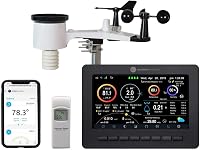
The Ambient Weather WS-2902 is the better first station for most homes. It bundles a solar-powered sensor array, a color LCD console and Wi-Fi sharing to the Ambient Weather Network in one purchase.
Its array measures wind speed and direction, temperature, humidity, rainfall, UV intensity and solar radiation. That's the full outdoor set most people want.
The Davis side works differently. The WeatherLink Console needs a Vantage Pro2 or Vantage Vue sensor suite to feed it.
On its own it's a display and data hub, not a standalone station.
For a beginner who wants one box and one app, Ambient is the simpler choice. For a weather hobbyist building a long-term dataset, Davis makes more sense.
Our Ambient Weather station guide covers the brand's range in more detail. Read that if you want to compare models before picking a kit.
How the two station types compare side by side
Ambient sells an all-in-one kit; Davis sells modular components you combine. The comparison table below shows how the WS-2902 and WeatherLink Console differ in what they include and what they measure.
| Feature | Ambient Weather WS-2902 | Davis WeatherLink Console |
|---|---|---|
| What's in the kit | Sensor array, console, AC adapter | Console only (needs a Davis sensor suite) |
| Sensors | Wind, rain, temperature, humidity, UV, solar | Depends on the attached Vantage suite |
| Display | LCD color | HD color touchscreen |
| Connections | 915 MHz RF to console, Wi-Fi to network | Wi-Fi, RF, Ethernet |
| Historical data | Stored in the Ambient Weather Network | Stored on the console and in WeatherLink |
| Smart home | Alexa, Google Home, IFTT | Alexa, Google Assistant |
| Best fit | First station, easy setup | Long-term data, multi-sensor networks |
The table shows the biggest structural difference. The Ambient kit is a complete package.
The Davis console is one piece of a larger system.
That doesn't mean Davis is worse. It means Davis expects you to own or buy the outdoor sensors separately.
Plan the whole system before comparing costs.
Which brand wins on sensor coverage?
Ambient includes more sensor types in its base kit; Davis lets you add far more sensors over time. The winner depends on whether you want one complete station or a system you can expand.
The WS-2902's array covers the six measurements most home weather watchers need. It reads UV intensity and solar radiation too, which matters if you track sun exposure or plan solar panels.
Davis's WeatherLink Console supports up to 8 transmitting sensors or sensor suites. Davis says you can choose from more than 80 sensors to build a personal weather network.
That flexibility is real but costs more. Each extra Davis sensor is a separate purchase.
The base kit only goes as far as the suite you attach.
For a single backyard location, Ambient's coverage is enough. For a farm, greenhouse or multi-building site, Davis's expansion options do more.
What the Ambient array measures out of the box
The Ambient Weather WS-2902 includes an Osprey sensor array with a rain cup. It reads wind speed and direction, temperature, humidity, rainfall, UV and solar radiation.
The console shows indoor conditions too. It displays indoor and outdoor temperature and humidity, barometric pressure, dew point, heat index and wind chill.
Wi-Fi sends the data to the Ambient Weather Network. That gives you a remote dashboard, alerts and smart home hooks through IFTT, Google Home and Alexa.
What the Davis console expects
The WeatherLink Console displays up to 21 parameters on its dashboard. It shows inside and outside temperature and humidity, barometric pressure, wind, rainfall and more.
It receives and displays data from your local network without Wi-Fi. Add Wi-Fi and it joins the WeatherLink community so you can upload and share.
The console stores historical records and creates over 100 graphs for 24 hours, days, months or years. That's the feature that appeals most to long-term trackers.
Which display is easier to live with?
The Davis WeatherLink Console has the better screen; the Ambient LCD is simpler but still readable. Screen quality matters if the console sits in a living space you look at often.
The Davis console uses a vibrant HD color touchscreen. You navigate by tapping, and you can customize the dashboard to show the parameters you care about.
Its touchscreen makes graphing easier. You can pull up last month's rainfall or wind history without opening a browser.
The Ambient console uses a brilliant, easy-to-read LCD color display. It's not a touchscreen and it's less customizable, but it shows current conditions clearly.
Both consoles include an AC adapter. The Davis console adds an integrated lithium-ion battery to protect against data loss during outages.
Setting up each display in your home
The Ambient console connects to the sensor array by RF and to your Wi-Fi network. Setup means pairing the array, entering Wi-Fi credentials and creating an Ambient Weather Network account.
The Davis console can receive local data without Wi-Fi. That's useful if your router is far from the sensor or you'd rather keep the station off the cloud.
Its Ethernet port gives you a wired option. That's more reliable than Wi-Fi in a house with thick walls.
If you want a screen you'll enjoy using, Davis wins. If you just want to glance at conditions, Ambient's display does the job.
How do the networks and smart home features stack up?
Both connect to smart home systems, but Ambient leans on its own network and Davis leans on WeatherLink. The choice comes down to which community and app you prefer.
The WS-2902's Wi-Fi sends data to the Ambient Weather Network, which the brand describes as the world's largest personal weather station network. You can customize dashboard tiles, share conditions on social feeds and set alerts.
It works with IFTT, Google Home and Alexa, so you can program your home based on weather. A rain alert can trigger a smart plug or close a vent.
The Davis WeatherLink Console joins the WeatherLink community when connected to Wi-Fi. It uploads and shares data and tracks 7-day forecasts through the WeatherLink Cloud.
It works with Amazon Alexa and Google Assistant. It also supports a second console so you can view data in more rooms.
Where Ambient's network helps most
The Ambient Weather Network is friendly to newcomers. You sign in, see your station's dashboard and share a link with neighbors or family.
The network integration means you don't need a separate hub. The console talks to Wi-Fi and the cloud directly.
Where Davis's data tools help most
WeatherLink is built around records and graphs. If you want to export history or run long trends, Davis gives you more to work with.
The console's internal database means your data doesn't depend on a cloud service staying free. That matters if you keep years of records.
Read our Tempest vs Ambient Weather comparison if you're weighing a station with no moving parts against the Ambient kit. It covers how the two handle wind readings differently.
Which brand is easier to set up and expand?
Ambient is easier to set up because everything is in one box; Davis is easier to expand once the base system runs. Plan for the setup step you'll actually face.
With the WS-2902, you mount the sensor array, connect the console and pair it. The array mounts to any pole between 1.25 and 2 inches in diameter with its U-bolt bracket.
The pole isn't included.
The array's primary power comes from a solar panel that charges a super capacitor. Battery backup is optional.
The wireless signal reaches up to 330 feet line of sight in open air.
The Davis route starts with the sensor suite and the console. The WeatherLink Console is compatible with Vantage Pro2 and Vantage Vue stations.
You pair the two, then add sensors as needed.
Expansion on the Davis side is more involved but more capable. You can run up to 8 transmitters and dozens of sensors from one console.
What to buy first on each side
Start with the Ambient WS-2902 if you want a working station today. It's one purchase and one setup session.
Start with a Davis sensor suite plus the WeatherLink Console if you know you'll add sensors. Buy both together so the console has data to show.
Our Ecowitt vs Ambient Weather comparison covers another budget-friendly brand if the Ambient kit feels like more than you need. It helps you see where the entry-level options sit.
Replacement parts and long-term upkeep
Davis sells individual replacement parts. The standalone Davis anemometer for the Vantage Pro2 and Vantage Pro is a direct swap for a failed wind sensor.
That's the Davis advantage in upkeep. When one sensor dies, you replace that piece, not the whole station.
Ambient's kit is more of a unit. A failed sensor array usually means a new array, though the console can often keep working.
The Newentor indoor thermometer fits here as a cheap backup. If you want a separate room display that reads indoor and outdoor temperature without a full station, it covers that gap.
Who should buy which brand?
Buy Ambient if you want one complete, connected station for your backyard. Buy Davis if you want the most accurate long-term data and plan to expand.
The split is clear once you know your goal.
The WS-2902 suits a homeowner who wants to know local conditions and share them. It's also the right pick for someone setting up their first station and doesn't want to assemble parts.
Its smart home links and network dashboard make it useful for automation. You can set alerts and tie weather to devices without extra hardware.
Davis suits the hobbyist or small grower who will keep records for years. The WeatherLink Console's internal history and graphing tools are the draw.
It also suits anyone who already owns a Vantage Pro2 or Vantage Vue and needs a modern console. The WeatherLink Console upgrades an older system without replacing the sensors.
When Ambient is the better buy
Choose Ambient when the total kit and a simple Wi-Fi setup matter more than deep data history. The WS-2902 covers the main outdoor measurements in one box.
It's also the lower-stress option for a gift or a first station. One purchase, one app, one place to look.
If you're comparing brands at the entry level, our Sainlogic vs Ambient Weather comparison shows how a cheaper kit trades features for price.
When Davis is the better buy
Choose Davis when you'll build a multi-sensor network or keep years of records. The console's 8-transmitter support and stored history are built for that.
Davis also makes sense if you already have Davis sensors or plan to add specialized ones. The 80+ sensor options let you tailor the network to your site.
The standalone anemometer is the practical example. Replacing one failed wind sensor is cheaper and simpler than replacing an entire array.
The verdict on Ambient Weather vs Davis
For most readers, the Ambient Weather WS-2902 is the station to buy. It delivers a full outdoor sensor set, a color console and Wi-Fi sharing in one kit at a lower entry point.
Choose Davis when long-term records and sensor expansion are the point. The WeatherLink Console is the stronger data hub, but it needs Davis sensors to do its job.
The decision rule is simple. If you want a station that works out of the box and connects to smart home gear, buy Ambient.
If you're building a weather network you'll grow for years, buy Davis and plan the full system.
Whichever brand you pick, mount the sensors clear of walls and trees for the best readings. Our best Ambient Weather stations guide is the next stop if you want to compare Ambient models before ordering.
Frequently asked questions
Is Davis better than Ambient Weather?
Davis is better for long-term sensor accuracy and building a multi-sensor network. Ambient Weather is better for a complete all-in-one kit that shares data online easily.
Most home users get more value from Ambient.
Can the Davis WeatherLink Console work without a Davis sensor?
No. The Davis WeatherLink Console needs a Vantage Pro2 or Vantage Vue sensor suite to display outside data.
It's the head unit for a Davis system, not a standalone station.
What does the Ambient Weather WS-2902 measure?
It measures wind speed and direction, temperature, humidity, rainfall, UV intensity and solar radiation from its solar-powered sensor array. The console also shows indoor temperature and humidity, dew point and barometric pressure.
Do these weather stations need Wi-Fi?
The Ambient Weather WS-2902 uses Wi-Fi to send data to the Ambient Weather Network. The Davis WeatherLink Console can connect by Wi-Fi, RF or Ethernet.
Neither needs Wi-Fi to show current readings on its own display.
How long do the outdoor sensors last?
Both brands use solar-powered arrays with battery backup on their main station kits. Expect to replace backup batteries every year or two depending on sun exposure.
Davis sells replacement sensors like the standalone anemometer.