Ecowitt WS90 Review: Worth It? (November 2026)
The Ecowitt WS90 is a strong buy if you already run Shelly smart-home gear or plan to. Its haptic rain sensor and ultrasonic wind reading give you rain start and stop events without moving parts, and the main thing to know is that it needs a gateway before the Shelly app will see it.
On this page (9 sections)
The Shelly Ecowitt WS90 is a strong buy for Shelly smart-home owners who want local weather data feeding their automations. Its haptic rain sensor detects rain start and stop without moving parts, and the ultrasonic wind reading removes the spinning cups that can wear or jam over time.
This Ecowitt WS90 review covers what the sensor measures, how it pairs with a gateway and who should look at a different station.
The catch is the box. The WS90 is the outdoor 7-in-1 sensor only, so you need a compatible gateway before the Shelly app shows a single reading.
Budget for that hub, or confirm the Shelly device you already own supports it.
The Ecowitt WS90 at a glance
The WS90 packs seven weather readings into one outdoor unit: temperature, humidity, wind speed and direction, rainfall, light and UV. It skips the separate rain gauge and anemometer that a traditional station needs on the mast.
Shelly Ecowitt WS90 7-in-1 Weather Station: Best for Shelly smart-home owners
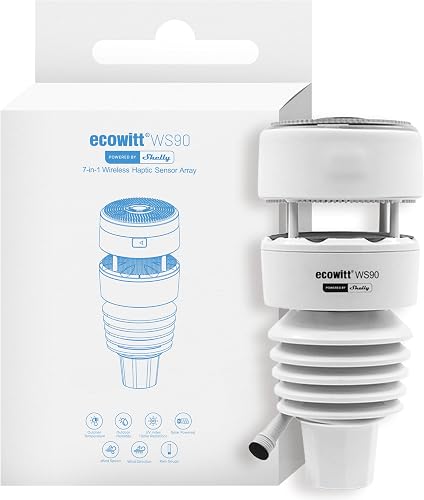
- 7-in-1 outdoor sensor: temperature, humidity, wind, rain, light and UV
- Haptic rain sensor with rain start and stop detection
- Ultrasonic wind speed and direction
- Bluetooth and Zigbee connectivity
- IPX5 waterproof rating
- Solar panel with 2 AA backup batteries
- Up to 300 m (1,000 ft) open-air transmission
A no-moving-parts 7-in-1 outdoor sensor that feeds local rain, wind, light and UV data into Shelly automations. Pair it with a supported gateway and it can skip irrigation after rain or close shutters when wind picks up.
Pros
- Haptic rain sensor measures volume and detects rain start and stop
- Ultrasonic wind sensing with no spinning cups
- Solar panel plus 2 AA backup batteries
- IPX5 waterproof housing
- Works with Shelly BLU Gateway and Shelly Plus, Pro, Gen3 or Gen4 devices
Cons
- No display, so readings live in the app
- Needs a gateway before the Shelly app sees it
- Only the outdoor sensor is in the box
Shelly built this one for people already inside its ecosystem. The sensor talks over Bluetooth and Zigbee, and it feeds Shelly relays and controllers so weather conditions turn into actions rather than just numbers on a screen.
Our score weighs specs, features and buyer feedback against what you're shopping for. The 9.7 reflects how much this sensor packs into one housing and how well it fits a smart-home setup, with the gateway requirement noted.
When the Ecowitt WS90 makes sense
Buy it if you run Shelly devices and want weather to trigger them. A rain reading that stops irrigation or a wind reading that closes shutters needs a sensor that reports those events clearly, and the haptic rain sensor does exactly that.
Skip it if you want a station with its own display and no hub. The WS90 has no screen, so everything you see comes through the app after the gateway relays the data.
Who the WS90 suits and who should skip it
The WS90 fits smart-home tinkerers who already own Shelly gear and want local conditions driving their automation rules. If your home runs Shelly relays, plugs and controllers, this sensor slots into rules you can build in the Shelly app.
It also suits gardeners who want to stop overwatering. Rainfall, humidity, wind and UV readings let you skip watering after rain and adjust schedules to real conditions instead of a forecast.
Skip it if you want a plug-and-play weather station with a console on the kitchen counter. The WS90 has no display, so the app is your only readout.
That means a gateway and a phone are always part of the picture.
Skip it too if you want a full kit in one box. This is the outdoor sensor on its own, and the instruction manual is the only included component.
Plan the hub before you order.
If you'd rather compare full starter kits, the Ecowitt Wittboy weather station bundles a sensor with a gateway, which changes the setup math.
The specs that matter in daily use
The haptic rain sensor and ultrasonic wind reading are the two specs you'll notice most. Neither uses moving parts, so there's nothing to jam, spin down or fill with debris over a season.
The rain sensor measures rainfall volume and detects when rain starts and stops. That event detection is what makes automations practical: a rule can respond to rain beginning rather than waiting for a daily total.
For irrigation, that's the difference between skipping a cycle and watering through a shower.
Wind speed and direction come from ultrasonic sensing. Traditional anemometers spin cups or turn a vane, and those parts can wear or collect grit.
Ultrasonic sensing reads the air directly, so the housing stays closed.
Temperature, humidity, light and UV round out the seven readings. UV and light levels feed rules like lowering blinds during strong sun, while humidity supports mold-prevention logic when it stays high for hours.
Power comes from a solar panel with 2 AA backup batteries. That combination keeps the sensor running through gray stretches without you climbing the mast to swap cells often.
At 461 g, it's light enough for a sturdy mast or bracket.
Setting up the WS90 and its gateway
Setup starts with the gateway, not the sensor. The WS90 needs a gateway before the Shelly Smart Control app can see it, so get the hub connected first.
Shelly lists the BLU Gateway and its Plus, Pro, Gen3 and Gen4 devices as compatible.
Mount the sensor where rain and wind reach it freely. A spot under an eave or beside a wall blocks rainfall and distorts wind readings.
Keep it clear of sprinkler heads that spray upward into the rain sensor.
Check the wireless link from the mounting spot. Shelly rates the range at up to 150 m (500 ft) with obstacles and up to 300 m (1,000 ft) in open spaces.
Walls, metal and dense foliage shorten that, so test before you fix the mast in place.
Once paired, build a few rules in the Shelly app and watch them fire. Start with something simple, like a rain trigger turning off irrigation, then add wind and UV rules as you learn the readings.
If you're unsure which hub to use, which Ecowitt gateway you need sorts the options by sensor and app support.
Automations the WS90 supports
The WS90's real value shows up in weather-driven rules, not just in reading numbers. Shelly pairs its rain, wind, humidity, temperature and UV data with relays and controllers so conditions trigger actions.
Rain detected can turn off irrigation through a Shelly relay or a sprinkler controller. High wind can close motorized shutters through a Shelly 2PM Gen4 before gusts reach your furniture.
Humidity that stays high for hours can start a dehumidifier.
Temperature rules cover the small stuff too. A garage fan can kick on when the space runs hot, a pipe heater can come on when it turns cold, and blinds can drop when solar radiation climbs.
The pressure trend alerts in the Shelly app add a forecasting layer. They warn when conditions are turning, which gives you time to protect a pergola, awning or outdoor furniture before weather arrives.
That combination of local sensing and smart control is the pitch. A generic forecast tells you about your region; the WS90 tells your home what's happening at your address.
Care and mounting over the seasons
Keep the rain and wind surfaces clear and the solar panel exposed. The haptic rain sensor has no bucket to empty or tipping mechanism to free, but leaves, bird droppings and spider webs can still sit on the sensing surface and skew readings.
Wipe the top surfaces when you check the station. A soft cloth and water handle most buildup, and the IPX5 rating means the housing tolerates rain and garden spray.
Avoid aiming a pressure washer at the seams.
Check the solar panel for shade growth. A branch that creeps over the panel in summer can leave the 2 AA backup batteries carrying more of the load.
Trim what blocks the light and confirm the batteries are still fresh.
Inspect the mount after storms. A mast that shifts changes wind direction readings, and a bracket that loosens lets the sensor tilt.
A quick check after rough weather keeps the data trustworthy.
The IPX5 rating covers water jets, not submersion. Mount clear of spots where water pools or a downspout dumps, and the housing is built for normal outdoor weather.
Trade-offs to weigh before you buy
The missing gateway and missing display are the two real catches. The WS90 is an outdoor sensor only, so the app is your sole readout and the hub is an extra cost on top of the sensor.
There's no screen on the unit and no console in the box. If you like glancing at a display on the counter, this station won't give you that without adding a Shelly device that shows the data.
The haptic rain sensor is a strength and a different way of working. It measures volume and detects start and stop, but it reads rain hitting its surface rather than funnelling it through a bucket.
Mounting position matters more than it would for a tipping gauge.
You're also tied to the Shelly ecosystem for the smart features. The sensor pairs over Bluetooth and Zigbee and works with Shelly hubs and devices, so automations run in the Shelly app.
If you're not in that ecosystem, the value drops.
The 9.7 score holds because the sensor does a lot in one housing and fits its niche well. That score assumes you have or want the gateway; without one, the WS90 can't report anything.
Alternatives worth a look
Two alternatives cover the main reasons to look past the WS90: wanting a full kit in one box, or preferring a different brand's ecosystem. Both are worth checking before you commit.
Ecowitt Wittboy GW2001
The Wittboy kit bundles the sensor with a gateway, so you get the hub in the same box. That removes the extra purchase and the matching step.
It's the simpler path if you want Ecowitt weather data without hunting for a compatible Shelly device.
The WS90 still wins on smart-home integration if you already run Shelly gear. The Wittboy suits someone who wants a weather station first and smart rules second.
The full Wittboy GW2001 review covers how the kit behaves day to day.
Ambient Weather stations
Ambient Weather offers its own range of stations with different app ecosystems. If you'd rather build around Ambient than Shelly, its stations may fit your plans better.
The WS90's edge is the haptic rain sensor and the Shelly automations, so weigh those against what Ambient provides.
Our Ambient Weather station comparison and the Ecowitt vs Ambient Weather breakdown help you choose between the two brands on features and app support.
Verdict
The Shelly Ecowitt WS90 is the pick for Shelly smart-home owners who want weather driving their automations. The haptic rain sensor and ultrasonic wind reading remove moving parts, and the seven readings feed rules that skip irrigation after rain or close shutters in wind.
Buy it if you already run Shelly devices or plan to. Pair it with a compatible gateway, mount it clear of shelter and sprinklers, and you have a sensor that turns local weather into actions.
Look elsewhere if you want a station with its own display or a full kit in one box. The Wittboy kit bundles a gateway, and Ambient Weather offers another ecosystem.
For everyone in the Shelly camp, this Ecowitt WS90 review lands on a clear buy.
The Ecowitt vs Ambient Weather guide is the next read if you're still weighing brands before you order.
Frequently asked questions
Does the Ecowitt WS90 need a gateway?
Yes. The WS90 is an outdoor sensor, so it needs a gateway before the Shelly Smart Control app can show its readings.
Shelly lists the BLU Gateway and its Plus, Pro, Gen3 or Gen4 devices as compatible, so match the sensor to the hub you already run before you buy.
How accurate is the haptic rain sensor on the WS90?
The haptic sensor measures rainfall volume and detects when rain starts and stops. Because it has no tipping bucket or moving parts, there is nothing to jam or fill with debris.
Shelly positions it for reliable year-round readings in harsh weather, though mounting height and nearby shelter still shape what it records.
What can the WS90 automate in a Shelly smart home?
Shelly pairs the WS90's rain, wind, humidity, temperature and UV readings with its relays and controllers. Examples include turning off irrigation when rain is detected, closing motorized shutters in high wind, running a dehumidifier when humidity stays high and lowering blinds during strong sun.
How far can the WS90 transmit to its gateway?
Shelly rates the wireless range at up to 150 m (500 ft) with obstacles and up to 300 m (1,000 ft) in open spaces. Walls, metal and dense foliage cut that distance, so site the gateway as close to the sensor as your layout allows.
Is the Ecowitt WS90 weatherproof?
The sensor carries an IPX5 waterproof rating and uses thermal insulation materials for outdoor use. IPX5 covers water jets from a nozzle, so it handles rain and garden spray.
It is not a rating for full submersion, and you should still mount it clear of standing water and sprinkler heads aimed upward.
Does the WS90 come with a rain gauge and wind sensor built in?
Yes. The WS90 combines rain, wind speed and direction, temperature, humidity, light and UV in one outdoor unit.
There is no separate rain gauge or anemometer to wire in, which keeps the mast simple.
A gateway is still required to get the readings into the Shelly app.